
The Hidden Cost of Feeling Overwhelmed
When everything around you seems to be quietly asking for your attention, even the smallest things can begin to feel heavy.
Sometimes it isn’t the amount of stuff in our homes that feels exhausting.
It’s everything the stuff is quietly asking us to do.
The letter on the kitchen worktop needs a reply.
The bag by the front door needs to go to the charity shop.
The clothes on the chair need putting away.
The parcel needs returning.
The drawer that barely closes needs sorting.
None of these things is particularly significant on its own. Most would probably take only a few minutes to deal with.
But together, they can turn our homes into a landscape of unfinished decisions.
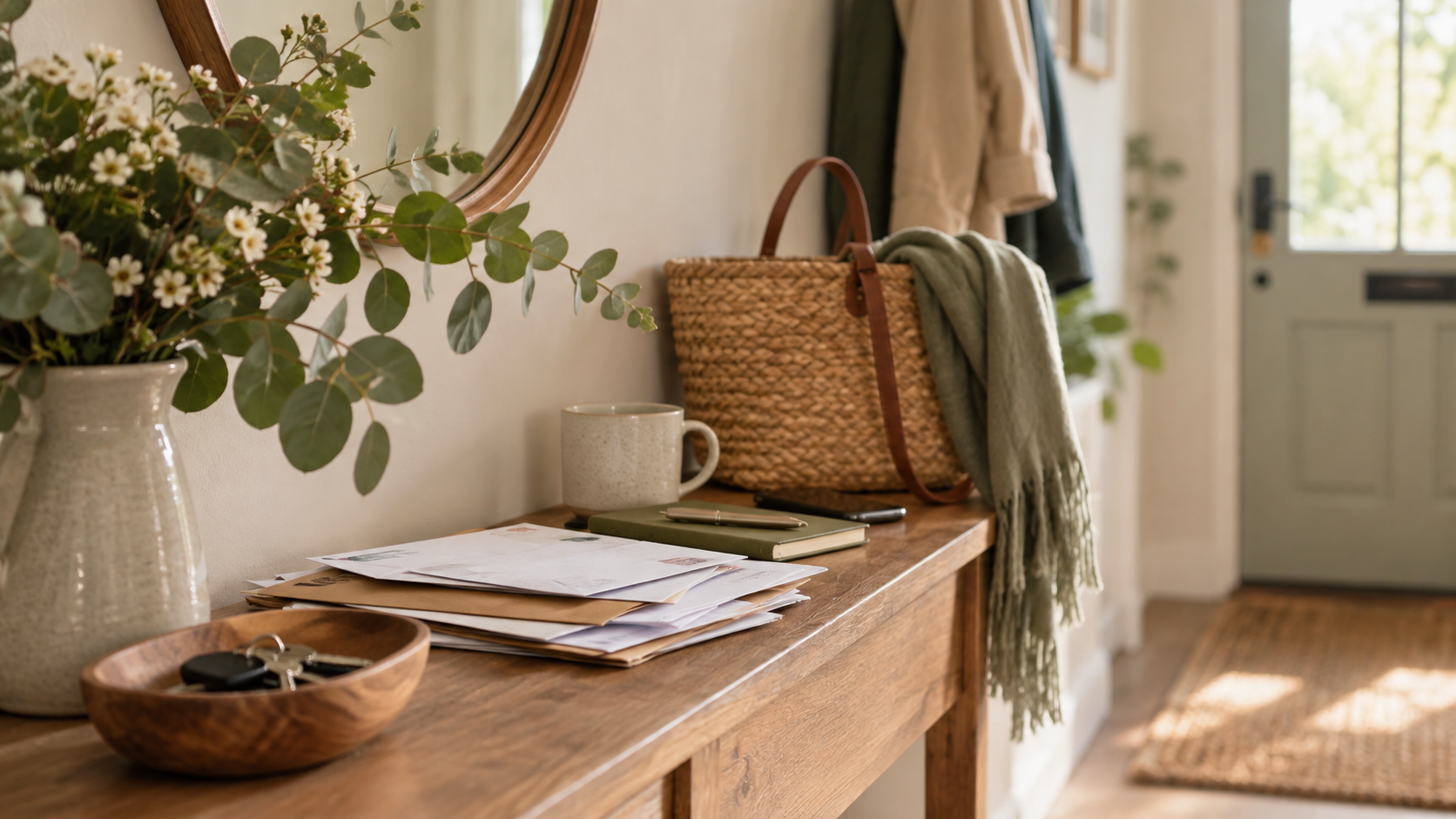
When everything becomes a reminder
We often think of clutter as something physical.
Something taking up space on a surface, in a cupboard or perhaps in an entire room.
But the things around us can take up another kind of space too.
Mental space.
Every time you walk past that parcel, there's a tiny reminder that you still need to return it.
Every time you see the pile of paperwork, you remember that somewhere in there might be something you need to deal with.
Every time you open an overfull cupboard, you're reminded that you've been meaning to sort it.
You may not consciously stop and think about any of those things.
But they're still there.
Little things still waiting for our attention.
Not everything is a simple decision
Of course, if every unfinished task took thirty seconds and required no thought, we'd probably just do it.
But our belongings aren't always that straightforward.
A dress that no longer fits might carry memories of a different time in your life.
A box inherited from someone you loved might contain things you don't particularly want, but don't feel able to let go of.
Something expensive that you never use can come with the uncomfortable knowledge of how much you paid for it.
Even an ordinary pile of paperwork can contain dozens of different decisions: keep this, respond to that, file this somewhere, shred that, find out whether this still matters.
So we postpone the decision.
Not because we're lazy or incapable of making it, but because right now it feels easier to leave it for another day.
And sometimes that's exactly the right thing to do.
The difficulty comes when another day quietly becomes weeks, months or even years.
When overwhelm creates more overwhelm
There's a frustrating cycle that can happen when life is already demanding.
When we're tired, stressed, grieving, unwell, caring for someone else or simply trying to juggle too many things, we naturally have less energy available for decisions that don't feel urgent.
So we leave them.
The paperwork stays on the table.
The bag stays by the door.
The clothes stay on the chair.
And gradually there are more things waiting for our attention.
Which means that when we finally do have a little energy, we're no longer looking at one decision.
We're looking at fifty.
The sheer number of them can make it difficult to know where to begin, so we put the whole thing off again.
Overwhelm has created more overwhelm.
The hidden cost
This is why an untidy or cluttered space can sometimes feel disproportionately exhausting.
It's not necessarily because you dislike how it looks.
It's because so much of what you're seeing represents something unfinished.
A decision.
A task.
An intention.
Something you meant to do.
Something you still haven't decided.
And occasionally, something you don't quite know how to deal with at all.
There can be another layer too.
The little voice that says:
I really should have sorted this by now.
Why can't I keep on top of things?
Everyone else seems to manage.
That voice doesn't help us make decisions.
It usually just makes the decisions feel heavier.
You don't have to deal with everything at once
When your home feels like it's asking too much of you, the answer doesn't have to be a huge decluttering project.
You don't need to look around and decide that today is the day you finally sort the house.
Instead, notice one thing that's been quietly waiting for you.
Not necessarily the biggest.
Perhaps even the easiest.
Put the charity bag in the car.
Return the parcel.
Reply to the letter.
Make the appointment you've been meaning to make.
Make the decision about the object you've been moving from one surface to another for the past three weeks.
Then stop if you want to.
Because you've done something more useful than simply making one small area look tidier.
You've removed one thing that was quietly asking for your attention.
Sometimes it helps to have someone beside you
Sometimes we know exactly what needs doing, but getting started on our own still feels difficult.
And sometimes we've lived with things for so long that we can't even see where we might begin.
That's where having another person beside you can help.
At Willow & Home, I won't arrive with a plan for how your home should look, or expect you to have made all the difficult decisions before I get there.
We can work them out together, at your pace — starting with whatever feels manageable that day.
Because asking for help doesn't mean handing over control of your home.
Sometimes it simply means you don't have to carry all those decisions on your own.
A home that asks a little less
Creating a calmer home isn't always about owning less.
And it certainly isn't about having beautifully organised cupboards or permanently clear surfaces.
Sometimes it's simply about reducing the number of unfinished conversations taking place around you.
One decision made.
One task completed.
One thing no longer waiting for you.
And then, perhaps tomorrow, another.
You don't always need to create more space.
Sometimes you just need your home to ask a little less of you.