
When Grief Changes the Way Home Feels
Grief can change both what you need from your home and how you feel about the things within it.
Grief can change the way a home feels.
Spaces that once felt ordinary can suddenly carry more weight. Familiar objects can become reminders. Everyday tasks can feel harder than they used to, and things that would once have been simple decisions can become surprisingly difficult.
For some people, grief changes the home they are still living in. For others, there may be another home to deal with too — perhaps a parent’s house or the home of someone close.
There is no fixed way to approach any of this.
Sometimes the kindest thing you can do is separate what needs action now from what does not need a decision yet.
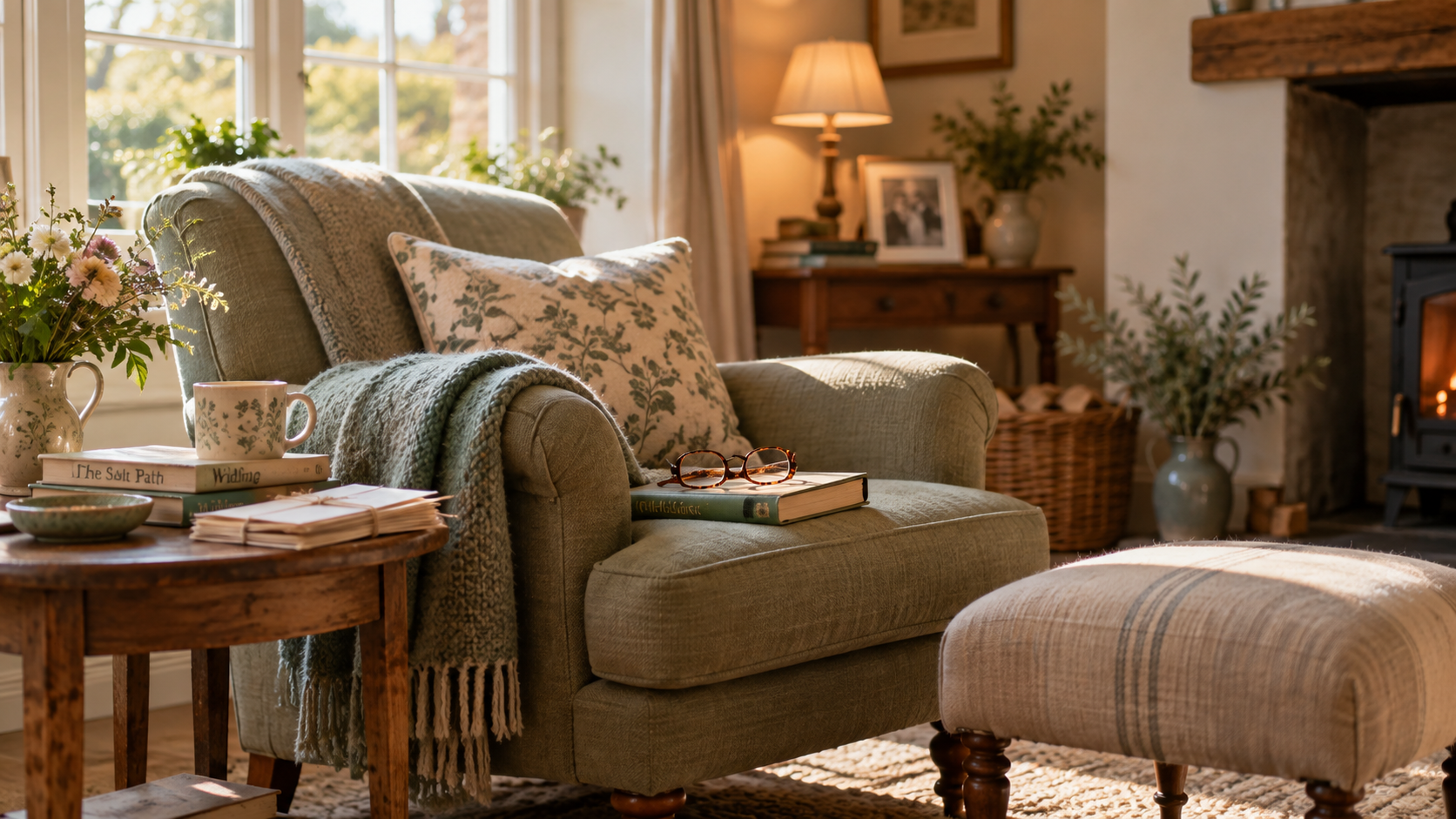
When grief enters the home you still live in
When someone who lived with you dies, the home can change even though very little has physically moved.
Their belongings are still there. Their routines may still be visible in the spaces around you. A coat by the door, toiletries in the bathroom, a favourite mug or a chair they always sat in can suddenly carry far more meaning than they did before.
There can be an urge to do something with those belongings — or pressure from other people to decide what should happen to them. But if there is no practical reason to make those decisions straight away, you do not have to.
Some things may stay exactly where they are for a while. Others may gradually feel easier to move, store or pass on. There is no timetable that makes one choice more correct than another.
What matters most is whether the home is still supporting the person or people living in it now.
If a space needs to work differently — perhaps a bedroom, dining room or shared living area — it can help to focus first on making that space usable, rather than trying to decide the future of every belonging within it.
You do not have to change everything simply because life has changed.
When you have to sort someone else’s home
Sorting the home of someone who has died can feel very different.
There may be practical reasons why things cannot simply stay as they are. A property may need to be valued, sold or handed back. Important paperwork may need to be found. Family members may need to make decisions together. There can be furniture, clothes, photographs, collections and years of everyday belongings to work through.
That can create a strange tension: some decisions are genuinely time-sensitive, while others feel deeply personal and much harder to make.
It can help to separate the practical from the sentimental.
Start with what genuinely needs attention — documents, valuables, items connected with the estate, anything perishable, and practical tasks linked to the property itself. Everything else does not necessarily need to be decided at the same pace.
A box of photographs, a favourite coat or a drawer full of personal possessions may not need an immediate answer simply because the house itself needs attention.
Sorting a home does not mean making every emotional decision at once.
What needs action now — and what can wait
When there is a lot to deal with, everything can start to feel equally urgent.
A useful first question is:
Does this need action now — or does it simply need attention eventually?
That distinction can make a big difference.
Some things have a genuine deadline or practical consequence if they are left. Those are the things to deal with first.
Other things may matter deeply, but they do not necessarily need an immediate decision. They can be noted, grouped safely, or left alone until there is more time, energy or emotional space to return to them.
The aim is not to postpone everything. It is to stop every task and every belonging from competing for the same level of urgency.
If something does not need a decision yet, you can give yourself permission not to make one.
You don’t have to decide everything at once
Some belongings are difficult not because you do not know what they are, but because you are not ready to decide what they mean to you now.
In those cases, a temporary decision can be enough.
You might group certain things together, label a box clearly, keep a small collection somewhere safe, or simply leave a particular drawer, cupboard or room untouched for a while.
The important thing is that “not yet” does not have to mean “never”, and it does not have to mean you are avoiding the task.
Sometimes creating a little space around a difficult decision is what allows you to come back to it more clearly later.
You are allowed to make a temporary decision while you work out the permanent one.
Grief can reduce the amount of energy and attention you have available for everyday life, so this may not be the time to expect the home to work exactly as it did before.
Instead of aiming for everything to be sorted, organised or back to normal, it can help to ask what the space needs to do for you now.
Perhaps the dining table needs to be clear enough to eat at. The kitchen needs to be easy to use. A bedroom needs to feel restful. A hallway needs to make getting out of the house a little easier.
Those basic functions matter.
If a room is holding more belongings than it can comfortably manage, focus first on protecting the part of the space that helps everyday life work. The rest can be dealt with gradually.
In difficult seasons, a home does not need to be perfect — it needs to support you.
Let function come first
There may be times when the practical task feels manageable, but the decisions themselves feel harder.
Having someone alongside you can make a difference — not to tell you what to keep or what to let go, but to help you work through things at your own pace, one decision at a time.
At Willow & Home, that might mean sitting with you as you sort through belongings, helping you separate what needs action from what can wait, creating simple categories, or helping a room become usable again without rushing the more emotional decisions.
Sometimes the most useful support is simply having a calm, practical presence beside you while you work out what feels right.
You do not have to make every difficult decision alone.
Sometimes it helps not to do it alone
Grief does not follow a tidy sequence, and neither does sorting a home after a loss.
Some decisions may feel surprisingly easy. Others may take much longer than you expected. You may be ready to deal with one category of belongings and not another.
That is okay.
The aim is not to move through everything quickly. It is to make the decisions that genuinely need making, protect the spaces that help daily life function, and give yourself time with the things that carry more weight.
A home can hold memories and still change. Belongings can matter without all needing to stay forever. And some things can simply wait until the right decision feels clearer.
There is no perfect way to do this — only the pace that feels manageable for you.