
Why Your Home Affects How You Feel
How the little things around us can quietly shape the way home feels.
Our homes are more than the belongings we keep in them. They’re where everyday life happens — and over time, they can quietly collect little reminders of everything still to be done.
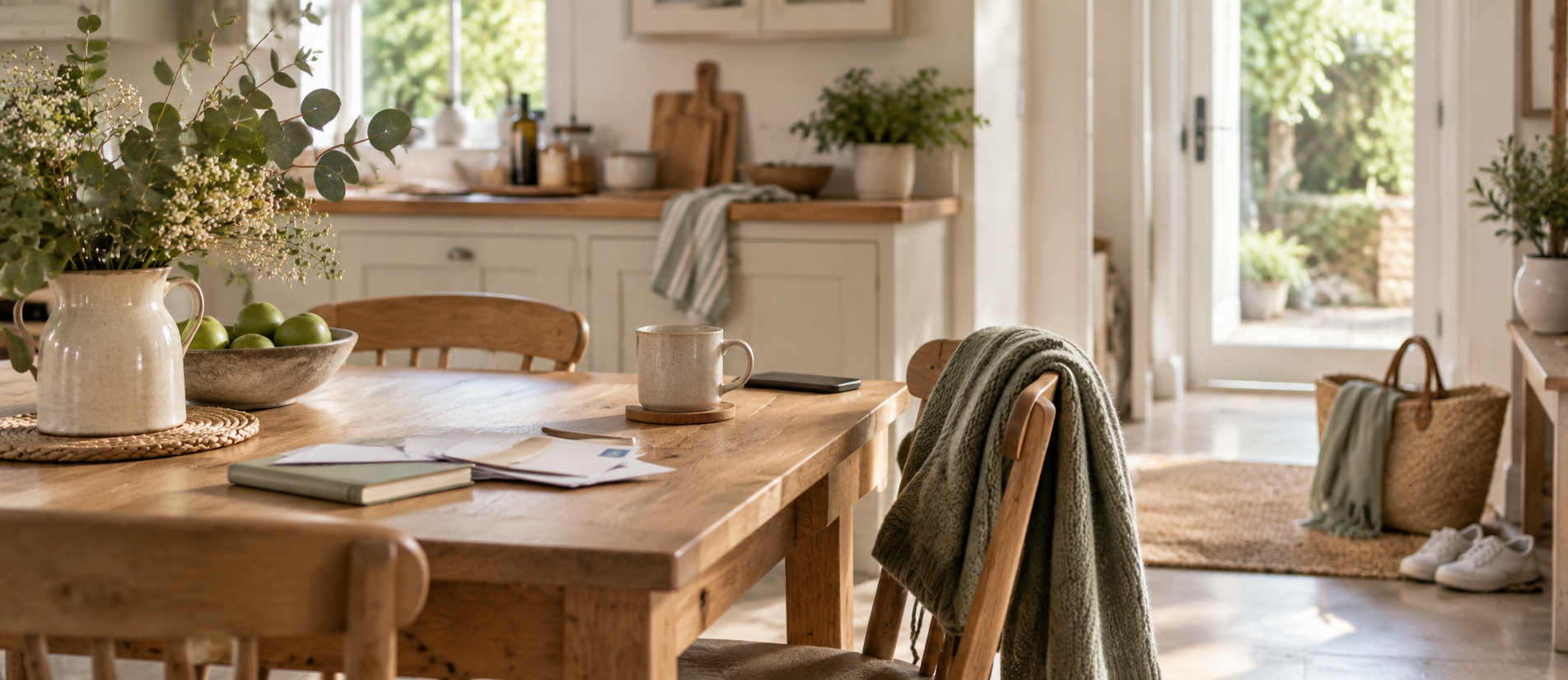
The unopened post. The clothes piled up waiting to be put away. The bag sitting by the door that you’ve been meaning to take to the charity shop. The cupboard you avoid because everything falls out.
None of these things are particularly significant on their own. You may barely notice them as you go about your day. But together, they can create a feeling that there is always something else needing your attention.
Sometimes it isn’t the mess itself that’s tiring. It’s everything the mess represents.
The unfinished threads
A home can gradually collect lots of little unfinished threads. Something to put away. A parcel waiting to be sent. A job you keep meaning to do. Something broken that needs repairing.
Each one can carry a tiny sense of I need to do something about that. You may not consciously think it every time you walk past, but the reminder is still there.
And it isn’t necessarily about how much you own. A home filled with books, photographs, collections and things you love might feel warm, comfortable and completely manageable. A much less cluttered room could still feel difficult if what you see reminds you of jobs you haven’t done or decisions you’ve been putting off.
It’s not always the amount of stuff that matters. It’s how your home feels to live in.
When you stop noticing what’s around you
When we live with the same surroundings every day, we can gradually stop noticing some of what’s there. The pile on the side, the things gathered on the stairs or the corner that has slowly filled up can simply become part of the background.
Sometimes it takes being away from home for a while to see it differently. You walk back through the door and suddenly notice things that had become almost invisible before you left.
Or perhaps someone is coming to visit. Suddenly you find yourself looking around as though you’re seeing your home through their eyes — and noticing all sorts of things you hadn’t really seen at all the day before.
We become accustomed to our surroundings. And even when we’re no longer consciously noticing something, those unfinished jobs and little points of friction can still be there.
Sometimes seeing your home with fresh eyes is enough to notice what isn’t quite working for you.
When your home asks a little less of you
The opposite doesn’t have to be a perfectly organised home.
Sometimes it’s simply knowing where your keys are when you need them. Being able to sit down without moving a pile first. Opening a cupboard and finding what you’re looking for.
These are tiny things, but they remove little moments of friction from everyday life. You don’t have to stop and think, move something, search for something or make another decision.
A calmer home isn’t necessarily one with less in it. Sometimes, it’s simply a home that asks a little less of you.
It’s about how your home works
It’s easy to think of an organised home as one where everything is neatly arranged and nothing is out of place. But a home can look beautiful and still be frustrating to live in.
Good organisation isn’t really about making your home look a certain way. It’s about making everyday life easier. The things you use regularly are where you naturally reach for them, and there’s somewhere sensible to put them when you’ve finished. Your home works with the way you actually live, rather than the way you think you should live.
Good organisation should make everyday life easier, not give you another system to maintain.
You don’t have to change everything
Once you start noticing these little points of friction, it can be tempting to see another list of things that need fixing. That isn’t the idea.
You don’t need to reorganise your whole home or find the perfect place for everything. Sometimes simply noticing what repeatedly makes life a little harder can help you see where one small change might make a difference.
Perhaps it’s finding a home for the post that gathers on the kitchen table. Clearing the chair you’d actually like to sit in. Moving something you use every day to somewhere easier to reach.
Start with what would make life a little easier, rather than what you think you should sort out.
And perhaps just ask yourself:
Is there something in your home that’s been quietly asking for your attention?